

Religious 31: Why the Word?
Eph 5:11: “...have no fellowship with the unfruitful works of darkness, but rather reprove them.”
Amos 3:7: “...God will do nothing, but he revealeth his secret unto his servants the prophets.”
Why this post?
We are not better than the people in the Bible. We think we are. We are not.
Something personal
Every now and then I feel the gravity of not knowing whether I’ll know when it slaps me in the face. And when I look at the Bible, the evidence is not on my side.
Am I able to read the signs of the times?
Introduction
Read something written a hundred years ago. Just one paragraph. A letter, a sermon, a newspaper column from 1925. Then read a corporate email from yesterday.
Tell me with a straight face which one came from the more discerning generation.
The language has collapsed. The attention has collapsed. We can’t sit with one sentence for fifteen seconds without a notification pulling us out. And yet — somehow — we have convinced ourselves that we are the ones who would have spotted what God was doing. We shall recognize Jesus. We shall leave Egypt. We shall build the ark or at least join Noah. We shall know.
It’s an extraordinary assumption. And it doesn’t survive five minutes of honest reading of the Bible.
Because here’s what scripture actually shows. The people who walked closest to God — who saw miracles, heard prophets, lived in the temple — repeatedly missed what He was doing in their own moment. Not because they were unsophisticated. Not because they didn’t try. Because discernment from inside the situation is almost impossible. Hindsight is perfect science. 20-20, right?
The New Testament generation had it worse than people realise. They had every Hebrew scripture. They kept the sabbath weekly. The prophecies of Daniel. Isaiah 53. Micah 5:2. They had Bethlehem named, the donkey named, the thirty pieces of silver named, the piercing named. The chief priests of Jerusalem could quote the verse for Herod from memory.
They missed Him anyway.
If they missed Him with that much advantage — what makes us think we’ll do better with less?
This post unpacks nine tests. Each one is illustrated by people who did see, and people who didn’t, and what we are supposed to learn from the gap. The point isn’t to mock them. The point is to stir something in ourselves.
1. The Recognition Test
The hardest thing in scripture isn’t believing in God. It’s recognising what He is doing in the moment.
Some did see.
Simeon and Anna recognised the infant Jesus in the temple — two old people, no credentials, just devotion. Cornelius the Roman centurion recognised God moving toward him. The wise men, foreign astrologers from a pagan land, travelled hundreds of miles tracking a star. They had less Bible than the priests of Jerusalem and read a sky better.
Most did not.
Adam literally walked with God in the garden — and still ate. Eve heard the serpent say something that was half true and couldn’t tell which half was the lie. Noah preached for 120 years, and the entire world ignored him. Everyone. Jesus’ own hometown tried to throw Him off a cliff after His first sermon — they had watched Him grow up, they knew His mother — and proximity blinded them. The disciples walked with the resurrected Christ on the road to Emmaus and didn’t recognise Him. The text actually says it — “their eyes were holden.”
The high priest was in the same temple as Simeon when the infant Christ was presented. Same room. Same baby. One saw, one didn’t.
How do you explain that? It worries me.
Now turn it on us.
We have the entire Bible. We have 2,000 years of church history. We have the Reformation, the printing press, the writings of every theologian who ever lived. The advantages are absurd compared to anyone before us.
And we still miss it. We watch headline after headline, sign after sign, alignment after alignment with prophecy — and we explain it away. Because from inside the situation, it never looks like the moment. It just looks like Tuesday. It’s still far away.
If Adam couldn’t recognise it walking with God Himself — what makes us think we’ll recognise it walking with our phones?
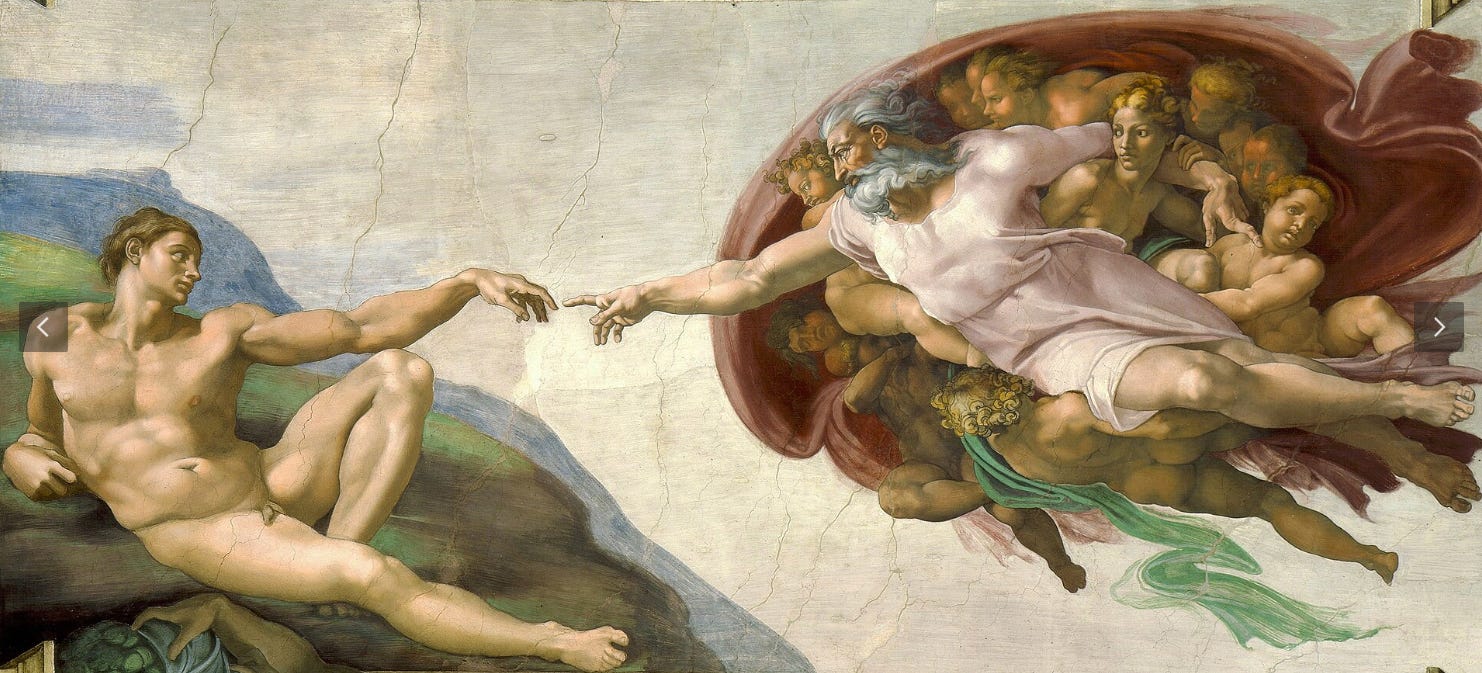
Michelangelo - Creation of Adam
2. The Comfort Test
Most spiritual collapse in the Bible doesn’t happen during persecution. It happens during prosperity.
Some did see.
Daniel kept his faith through 70 years of luxury in a Babylonian palace. He could have eaten the king’s meat, taken the king’s wife, melted into Babylon completely. He didn’t. He prayed three times a day with the windows open toward Jerusalem. The hardest thing he ever did wasn’t the lions’ den. It was the 60 years before, when nothing was forcing him to choose.
Most did not.
Solomon was the wisest man who ever lived. He had everything. By the end of his life he was burning incense to foreign gods. Solomon. Hezekiah was miraculously healed and then proudly showed his treasures to the Babylonian envoys — Isaiah told him every bit of it would be carried away in the exile. Hezekiah’s response? “Good is the word of the Lord which thou hast spoken... is it not good, if peace and truth be in my days?” (2 Kings 20:19). He didn’t care, because the cost wouldn’t fall on him.
Moses warned Israel before they even entered the promised land — “when thou hast eaten and art full, then beware lest thou forget the Lord” (Deuteronomy 6:11-12). He knew. He told them. They forgot anyway.
And then there’s Laodicea. Christ’s harshest letter in Revelation. The church that said — “I am rich, and increased with goods, and have need of nothing.” And His response? “Thou art wretched, and miserable, and poor, and blind, and naked.”
God does not concur.
Now turn it on us.
We are the most comfortable Christians in human history. Most of us reading this have heating, abundant food, clean water, no fear of death today. We have access to more Bible teaching, more sermons, more theological resources than any generation that came before. And we are spiritually... what?
If you read the 7 churches here you will know that Laodicea is us.
If you read scripture honestly, comfort is not a sign of God’s favour. It’s the most dangerous spiritual condition there is. Because affliction wakes you up. Tuff times build character. Comfort puts you to sleep — and lets you call it peace.
Like Paul said it in 1 Thessalonians 5:3 - ‘For when they shall say, Peace and safety; then sudden destruction cometh upon them, as travail upon a woman with child; and they shall not escape. ‘.
When Jesus said it would be “as the days of Noah” before His return, what was He describing? Not war. Not famine. Eating. Drinking. Marrying. Normal. “Until the day that Noe entered into the ark, and knew not” (Matthew 24:38-39).
They didn’t know. We probably don’t either. Unless we watch.
3. The Tradition Test
Jesus’ sharpest rebukes were not aimed at obvious sinners. They were aimed at the religious people who had added to God’s word — and didn’t know they had.
Some did see.
Josiah, as a young king, had the lost Book of the Law read to him. He tore his clothes. He realised the entire religious system had been operating without scripture for so long that finding it was a shock. He didn’t defend the tradition that had buried it — he reformed everything. Hezekiah broke the bronze serpent because the people had started worshipping it (2 Kings 18:4). It was a real artefact of God’s deliverance — and it had become an idol. He smashed it anyway. The Bereans, when Paul preached to them, “searched the scriptures daily, whether those things were so” (Acts 17:11). They didn’t trust the messenger. They tested him against the word. The Bible calls them more noble for it.
Most did not.
The Pharisees believed in the Bible. They memorised it. They tithed even their spices to obey it. And Jesus told them — “making the word of God of none effect through your tradition, which ye have delivered: and many such like things do ye” (Mark 7:13).
Many. Such. Like. Things.
It wasn’t one issue. It was a whole accumulated apparatus of additions, dressed in scripture, taught for generations, defended with sincerity. The Pharisees genuinely thought they were protecting the law. They were burying it under their fathers’ interpretations until the original was barely visible.
How would they have known? Their teachers had taught them. Their teachers’ teachers had taught their teachers. Going back centuries. The traditions felt older than the scripture itself — because in their experience, they were. Traditions became religion.
By the time Jesus arrived, the religious establishment was so committed to defending tradition that when truth showed up speaking they missed it.
Now turn it on us.
Every Christian tradition does this. Catholic, Protestant, Orthodox, Adventist — all of them. The question is never whether tradition has been added on top of scripture. The question is do you see it?
Sunday worship. Christmas trees. Easter eggs. Funeral rites. Communion practices. Baptism formulas. Building shapes. Liturgies. Prayer styles. Doctrinal frameworks invented in the fourth century, the eleventh century, the seventeenth century — passed down so faithfully you assumed they came from the apostles.
Test yourself. Pick something you absolutely believe is biblical Christianity. Open the Bible. Look for the verse. Just the verse. Not the verse plus 1,500 years of explanation. Just the text.
You may find it. You may not.
The Pharisees couldn’t tell the difference between scripture and tradition. They were the most Bible-believing people of their day. And they killed God when He showed up to correct them. How would we?
4. The Obedience Test
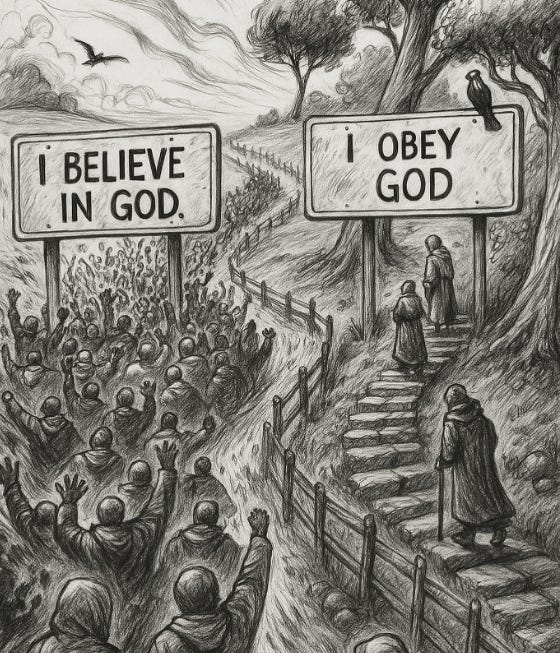
God’s instructions almost always look irrational from inside the situation. The faithful obey them anyway. The unfaithful explain why this particular instruction must mean something else.
Some did see.
Abraham left Ur — his civilisation, his family, his future — because God said go. He took Isaac up the mountain. He didn’t argue. He didn’t bargain. He went. Mary said “be it unto me according to thy word” and accepted a pregnancy that would look, to every neighbour she had, like a scandal. Joseph the carpenter believed her — and then obeyed an angel and fled to Egypt with a newborn in the middle of the night. Naaman, eventually, dunked himself in the Jordan seven times even though it felt beneath him.
Most did not.
Israel saw the Red Sea part. They ate manna every single morning for forty years. And within weeks of leaving Egypt they had built a golden calf, because Moses was up the mountain too long and they got bored. They had every imaginable evidence and still couldn’t sustain a few days of waiting.
Saul was told to wait for Samuel before offering the sacrifice. He waited. Samuel was late. Saul almost obeyed. He gave it 7 days, mostly. Then he offered the sacrifice himself because the situation seemed to demand it. He lost the kingdom for one act of almost-obedience. King Uzziah was a good king for fifty years and then decided he could offer incense himself in the temple. He came out a leper. The priests had begged him not to. He thought he knew better.
The man of God in 1 Kings 13 was given clear instructions — don’t eat, don’t drink, don’t go back the way you came. He obeyed perfectly. Until an older prophet lied to him and said God had given new instructions. He believed the lie. A lion ate him on the road home.
Even good prophets are deceived by other prophets. Even kings who served God for fifty years can fail in one moment. Even people fed by miraculous bread for forty years can build idols.
Now turn it on us.
Imagine — right now — God told you to give up the very thing He had given you. The promotion. The relationship. The platform. The plan. Would you?
Imagine He told you to leave a community you love. To say something publicly that would cost your reputation. To stop something that feels fine but isn’t. To rest a day a week when your industry doesn’t rest. To rest a day a week when your church doesn’t rest.
You don’t have to imagine. He told you. The instructions are in the book. We just routinely soften them, contextualise them, explain that they meant something different in their original setting.
If Israel could fail with manna falling from the sky every morning — what makes us think we won’t fail whilst watching the ball game?
5. The Faith Test
The Bible is full of people who obeyed and didn’t see the result in their lifetime.
Some did see.
Joseph spent 13 years in slavery and prison and ended up second to Pharaoh — but only after more than a decade of nothing. He kept his faith. The text doesn’t record him complaining. David spent years running from Saul, hiding in caves, writing some of his deepest psalms while convinced God had forgotten him. Job lost everything in a single day, sat in ashes, and his theology held — “though he slay me, yet will I trust in him” (Job 13:15).
Most did not.
The wilderness generation collapsed in faith repeatedly. Twelve spies went into the promised land. Ten said no — there were giants. Two said yes. The whole nation went with the ten and spent forty years dying in the desert because of it. They had crossed the Red Sea. They had eaten manna. They had a literal pillar of fire over them at night. And in one moment of fear they decided God couldn’t deliver giants.
The disciples — the men Jesus had personally trained for three years — all fled when He was arrested. Peter, who had said he would die for Him, denied Him three times in one night to a servant girl. A servant girl. Not a soldier. Not a high priest. A servant.
Hebrews 11 lists the heroes of faith and notes — “these all died in faith, not having received the promises” (Hebrews 11:13). Every single one of them obeyed for a result they would never see. Most of them were tortured, mocked, sawn asunder, slain with the sword. “Of whom the world was not worthy.”
The faith test isn’t whether you believe when things are working.
Now turn it on us.
We have it absurdly easy. Most of us have never been imprisoned for our faith. Never been tortured. Never lost everything in a single day. The hardest thing most Western Christians face is mild social awkwardness for being religious.
And we still buckle. We still drift. We still, when our prayers don’t get answered fast enough, quietly start making other plans. We still, when seasons of dryness extend past our patience, start questioning whether God was ever there.
If Peter could deny Christ to a servant girl after three years of personal training — How will we keep the faith?
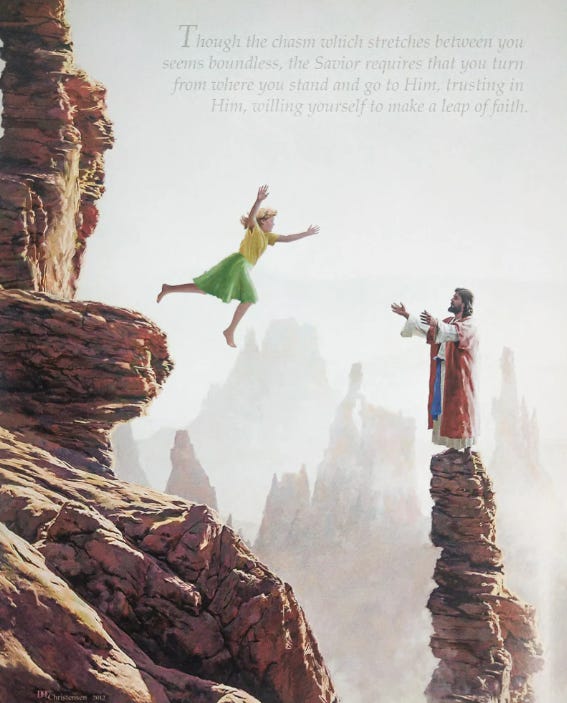
6. The Prophet Test
The pattern is consistent across the entire Bible. God sends a prophet. The people prefer the false ones. The true prophet is beaten, jailed, killed, exiled. The false ones are honored.
The prophets point out two things:
That we are wrong and need to repent, and
What is to come.
And we ignore them for making us feel uneasy.
A true prophet does not happen by chance, go read this again to know how to recognise a true prophet.
Some did see.
A few. Elijah’s hidden 7,000 who hadn’t bowed to Baal. The remnant in Jeremiah’s day. Mary Magdalene at the resurrection. Cornelius. The Bereans testing Paul against scripture. Throughout scripture there is always a remnant — and they are always small.
Most did not.
Jeremiah preached for forty years. Forty. He was beaten, put in stocks, thrown in a pit, accused of treason. He was right about everything. The people preferred Hananiah — a confident prophet who used God’s name and predicted peace within two years. Hananiah was wrong. He died within the year. But in the moment, in the temple courtyard, with two prophets contradicting each other — the crowd backed Hananiah. He sounded better. He told them what they wanted to hear.
John the Baptist looked like every false-prophet stereotype. Wilderness. Camel hair. Locusts. Yelling at religious leaders. Like the bum on the corner. Jesus called him “the greatest born of women.” The religious establishment — the people trained to recognise prophets — sent investigators to interrogate him and walked away dismissive.
Stephen preached the truth so directly the crowd stoned him for it. Saul of Tarsus stood there approving — and he was the most religious, most scripturally trained man in the room. He thought he was defending God. He was killing the messenger.
Even good men get this wrong. Even sincere zeal points the wrong way.
The Old Testament has a test for prophets. Deuteronomy 13 — even if a prophet performs signs and wonders, if he leads you away from God’s commandments, do not listen. Deuteronomy 18 — if what he predicts doesn’t happen, he wasn’t from God. The criteria are clear.
But applying them in real time is the hard part. Hananiah used God’s name. He sounded confident. His prediction was only two years out. By the time he was proven wrong, the damage was done.
Now turn it on us.
Who are the prophets in your life right now? Not the ones with platforms. Not the ones with conferences. The lone voices saying uncomfortable things, citing scripture, getting dismissed as fringe.
Are you listening? Or filtering them out?
The prosperity prophets always sound better. They always have. They tell you the system is fine, the church is fine, the trajectory is fine, just stay where you are and keep giving. The ones who say otherwise get cast as troublemakers, conspiracy theorists, divisive.
That is exactly what they were called in Jeremiah’s day. That is exactly what John the Baptist was called. That is exactly what Stephen was called.
Would you recognise a prophet today when the word clearly notes “...God will do nothing, but he revealeth his secret unto his servants the prophets.”?
Read this and consider the question again.

7. The Prophecy Test
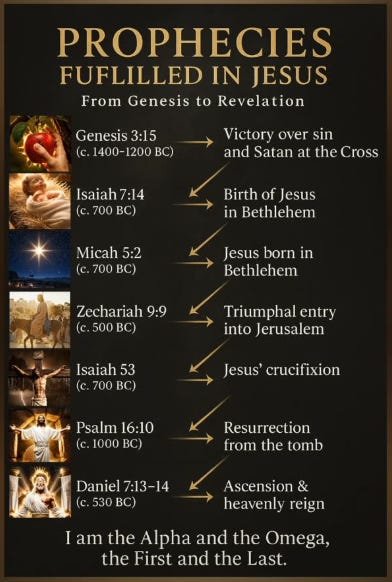
The Old Testament contains specific, detailed, verifiable predictions about the Messiah. Bethlehem (Micah 5:2). Born of a virgin (Isaiah 7:14). Thirty pieces of silver (Zechariah 11:12). Pierced (Zechariah 12:10). Riding a donkey (Zechariah 9:9). Out of Egypt (Hosea 11:1). Daniel even gave the exact week of the Messiah’s appearing (Daniel 9).
The religious experts had every one of these texts. They had calendars. They had scribes. They had the temple.
They missed Him completely.
Some did see.
The wise men — pagans — followed a star. Simeon and Anna in the temple recognised an infant. The shepherds went to Bethlehem on the word of an angel. None of them were religious experts. They were paying attention.
Most did not.
The chief priests in Jerusalem could quote Micah 5:2 to Herod from memory. Bethlehem. Two miles from where they sat. They didn’t go. They had the answer but never came.
The Pharisees memorised Isaiah 53 about the suffering servant. They read it every year. When Jesus was arrested, scourged, and crucified between two thieves — the literal embodiment of the prophecy — they didn’t connect it. They were busy ensuring His body came down before the Sabbath.
Judas was paid thirty pieces of silver — the exact amount Zechariah had specified 500 years before. Not approximately. Exactly. Thirty. The chief priests handled the coins. They didn’t notice the receipt.
When the crowd cheered Jesus riding a donkey into Jerusalem, the Pharisees told Him to rebuke His disciples for shouting. They knew the prophecy. They had read Zechariah 9:9 their whole lives. “Behold, thy King cometh unto thee... lowly, and riding upon an ass.” It was happening in front of them. They tried to silence the celebration.
How do you have the verse and miss the moment?
You miss it because prophecy fulfilled never looks like prophecy fulfilled — until later. From inside, it always looks like a coincidence, a controversy, a complication, a nuisance. A nutcase. The exact week Daniel predicted came and went, and the religious leadership didn’t notice because no one had been counting.
Now turn it on us.
We have more prophecy than they did. The whole of Daniel. The whole of Revelation. Specific time prophecies. Specific symbol systems. Two thousand years of historical fulfilment to verify the framework.
And most modern Christians have been taught Revelation is too symbolic to understand. That Daniel’s beasts are mysterious. That the time prophecies are vague. That the whole apocalyptic genre is “open to interpretation.”
That’s a lie. It’s a deliberate lie, with deliberate origins. The Reformers identified the prophecies clearly. The post-Reformation Jesuit response muddied them on purpose. And most modern Protestantism inherited the muddied version without realising it had been edited downstream.
The chief priests had Bethlehem named and stayed home.
Will you recognize prophetic fulfillment? Will you know to look?
8. The Deception Test
Everyone thinks they would know if they were deceived. Almost no one does.
Some did see.
Daniel saw through the entire Babylonian system from inside it. Paul saw through the Judaisers in Galatia even though they sounded apostolic. The Bereans tested Paul himself against scripture. Throughout scripture, the ones who saw through deception did so because they tested everything against the word, and because the Spirit had opened their eyes.
Most did not.
The Bible is unusually direct about this — and it’s worth quoting, because it’s stronger than any modern Christian instinct.
“There is a way which seemeth right unto a man, but the end thereof are the ways of death” (Proverbs 14:12).
Solomon thought it was important enough to repeat almost word for word two chapters later (16:25). The path seems right. To you. From inside.
“He that trusteth in his own heart is a fool” (Proverbs 28:26).
Modern Christianity tells you to follow your heart. The Bible calls it foolishness.
“The natural man receiveth not the things of the Spirit of God: for they are foolishness unto him: neither can he know them, because they are spiritually discerned” (1 Corinthians 2:14).
Cannot know them. Without the Spirit, the things of God are not just unwelcome — they are invisible.
“Satan himself is transformed into an angel of light” (2 Corinthians 11:14).
The deception comes as light. It looks holy. It looks apostolic. That’s the whole point.
“And for this cause God shall send them strong delusion, that they should believe a lie” (2 Thessalonians 2:11).
God Himself sends the delusion — as judgment on those who “received not the love of the truth.” Sincerity does not protect you. Loving truth does.
Peter — the Peter, who had just confessed Jesus as the Christ — took Him aside moments later and tried to talk Him out of the cross. He thought he was protecting his Lord. Jesus' response? "Get thee behind me, Satan." The same Peter. Same conversation. Right answer one minute, Satan's voice the next. He didn't even know which was which. Would you have known?
Look at Ezekiel 8. God shows the prophet what is happening inside the temple. Idolatry. Sun worship. Women weeping for Tammuz. The leaders of Israel doing it secretly behind closed doors. The ordinary worshippers had no idea. They came in, they sang, they offered, they went home — and the entire institution was rotting from the inside while looking fine from the pews.
Could the ordinary Israelite have known? Almost certainly not, without the prophet showing them.
Now turn it on us.
The most uncomfortable verse for any modern Christian is the one most modern Christians have been quietly trained to avoid.
“And no marvel; for Satan himself is transformed into an angel of light.”
Every false teaching that ever entered the church came in looking holy. It quoted scripture. It used Jesus’ name. It cited tradition, councils, fathers, saints. It built beautiful buildings. It produced moving music. It brought tears to people’s eyes. That’s how deception works.
If it looked obviously demonic, no one would fall for it.
Scripture notes that Satan will show up, but most will not recognize him!
So when modern believers say “I would know,” what they actually mean is “I would have spotted obvious evil.” But that’s not the test. The test is whether you would have spotted holy-looking evil. And the entire weight of scripture says:
No, you wouldn’t have, and neither would I, except by the Spirit and the word.
The whole point of the prophets is that God’s people, on their own, cannot see what is being done to them. They have to be told. From outside the system. By someone willing to be hated for saying it.
That is not a flattering picture of our discernment, but the lack thereof.
Matthew 24:24 - “…and shall shew great signs and wonders; … deceive the very elect.”
9. The Coming Out Test
Every revival in scripture begins with a call to leave. To repent.
Some did see.
Abraham left Ur. Lot left Sodom — barely. Moses chose to suffer with God’s people rather than enjoy the pleasures of Egypt. Daniel chose differently in Babylon. The early Christians eventually left the synagogue (or, more accurately, were thrown out of it). The Reformers left Rome. The Pilgrims left England.
In every case, leaving cost everything. Family. Reputation. Inheritance. Safety. They went anyway.
Most did not.
Lot’s wife looked back — and she’d seen the angels with her own eyes. The mixed multitude that left Egypt with Israel constantly agitated to go back. “We remember the fish, which we did eat in Egypt freely; the cucumbers, and the melons, and the leeks” (Numbers 11:5). They remembered the cucumbers. They forgot the whips.
The Israelites in exile in Babylon were given a chance to return. Most didn’t. The land of their fathers, the temple to be rebuilt, the prophetic destiny of their nation — and most of them stayed in Babylon because their lives were comfortable there. Ezra and Nehemiah came back. The majority did not.
Even the disciples — after Pentecost — were dragging their feet on the implications of the gospel for the Gentiles. Peter had to be given a vision three times before he would go to Cornelius’s house.
The Bible’s final book ends with one of its starkest commands.
Revelation 18:4 - “And I heard another voice from heaven, saying, Come out of her, my people, that ye be not partakers of her sins, and that ye receive not of her plagues.”
God’s own people are inside something called Babylon — and they have to be called out.
That verse only makes sense if His people, by default, would not realise where they were.
Now turn it on us.
Coming out is the costliest test by far. You don’t leave a system you never believed in. You leave the one you grew up in. The one that taught you to pray. The one that buried your parents. The one your spouse still attends. The one your community is built on.
Coming out always feels like betrayal from inside. It always looks like rebellion. It always gets called divisive by the people who want you to stay.
But the call exists. “Come out of her, my people.” Past, present, future — the call has always existed. Most of God’s people, in most generations, have stayed too long in places they should have left. They told themselves they could fix it from inside. They told themselves their staying was a witness. They told themselves the worst was over and the institution was reforming.
It rarely was. They rarely could.
If you find yourself in a system that has clearly added to scripture, clearly suppressed prophecy, clearly preferred tradition to the word — and you are still there, still defending it, still telling yourself it’s fine — you are inside the test. You are inside the verse. You are inside the moment.
The people who came out always came out before it was easy. By the time it was easy, the call was already over.
Matthew 24:16-18 - 16 Then let them which be in Judaea flee into the mountains: 17 Let him which is on the housetop not come down to take any thing out of his house: 18 Neither let him which is in the field return back to take his clothes.


Whydoneit
Why did God give us the Word?
Not so we could admire it. Not so we could memorise it for trivia. Not so we could decorate our homes with it.
He gave us the Word so we can learn from their mistakes.
The Bible is the record of every previous failure to discern. Every example is a warning we are meant to use. Adam ate. Eve listened. Cain offered wrong. Noah’s generation laughed. Lot’s wife looked back. Israel built the calf. Saul disobeyed. David presumed. Solomon drifted. Hezekiah showed off the treasures. Israel killed the prophets. The Pharisees missed the Messiah. The disciples slept in the garden. Peter denied. Judas sold.
Every one of those is a story God could have left out. He didn’t. He left them all in. Because we needed to see, through their eyes, what we cannot see through our own.
The whole Bible is essentially God saying — here is every way My people have ever failed to recognise what I was doing. Don’t be like them. And here are the few who saw — be like those.
But here is the deepest cut. Even with all of that, we will still fail — unless something changes.
Reading the Bible is not enough. The Pharisees read it constantly. Information is not enough. The chief priests had Bethlehem memorised. Sincerity is not enough. Saul of Tarsus was sincerely defending God when he held the coats of those stoning Stephen. Religious training is not enough. Religious experts have missed God in every generation of scripture.
So what is enough?
Just this. The Holy Spirit, working through the Word in prayer, awakening the heart of one who actually wants the truth more than they want their tradition.
That’s it. That’s the only thing that has ever produced discernment. Not in the Old Testament. Not in the New. Not in any reformer or revivalist or quiet saint who ever saw what their generation missed. It was always — always — the Spirit and the Word together, in someone who was willing to be wrong, willing to be hated, willing to leave.
Ask yourself honestly. When you read scripture, do you read to discover — or to confirm? When you hear something uncomfortable, do you sit with it — or do you immediately reach for the explanation that lets you stay where you are? When the Spirit nudges, do you listen — or do you outsource the decision to your pastor, your tradition, your peer group?
We are NOT better than the people in the Bible. The de-evolution of language, attention, depth, and discernment over the last hundred years should have ended that argument. We are spiritually weaker than our grandparents. We are significantly weaker than the generations they read about.
But we have one thing they didn’t have. We have the whole Word. All of it. Old and New, prophets and apostles, beginning and end. We have what they were waiting for.
The question is whether we will use it the way it was meant to be used. Not as a comfort blanket. Not as a debate manual. Not as a museum piece.
As a mirror. As a warning. As a training set for discernment.
And when we hold it up — honestly, with the Spirit, asking to see clearly — we should expect it to show us things we don’t want to see. About our church. About our tradition. About our generation. About ourselves.
If it doesn’t, we are not reading it honestly. We are finding ways to make the Word say what we already believe.
We are not smarter than them. We are not more discerning than them. We are exactly where every other generation has been — with one Bible, one Spirit, and one chance to read it as if our soul depended on it.
Because it does.
“He that hath ears to hear, let him hear.”