

Eph 5:11:"…have no fellowship with the unfruitful works of darkness, but rather reprove them.”.
Amos 3:7 “…God will do nothing, but he revealeth his secret unto his servants the prophets.”
Why this post?
To highlight the gravity of the judgement.
Introduction
Daniel 8:14 - And he said unto me, Unto two thousand and three hundred days; then shall the sanctuary be cleansed.
Daniel wrote that the 2300 days prophecy started when the “commandment to restore and to build Jerusalem” was decreed which was 457BC (Ezra 7:11-26). That start date projects to an end in 1844AD when the cleansing of the sanctuary commenced. Some thought that Jesus would return at that time, but Matt 24:36 is clear that the date and time is not known by anyone:
Matt 24:36 - “But of that day and hour knoweth no man, no, not the angels of heaven, but my Father only.”
Also, according to Revelation, for the end to arrive, there are a set of events that are to unfold prior to the second coming. We’ll discuss those later.
What is the sanctuary?
Considering typology, the earthly sanctuary reflects the heavenly sanctuary, thus to understand the heavenly sanctuary, we need to analyse the earthly one.
Hebrews and Revelation describes the original sanctuary in heaven and Exodus, Numbers and Leviticus describes the earthly model:

Three main areas and a veil that separated the the two rooms:
Courtyard:
Altar of burnt offering → Christ's sacrifice on the cross;
Laver of bronze → Represents baptism and cleansing from sin;
Single entrance on the eastern side → Rejection of pagan sun worship, as worshippers had to turn their backs to the rising sun to enter;
Four horns on the altar → Call of Christ to the four corners of the world;
Holy place
Candlestick → Christ as light of the world;
Alter of incense → Prayers of God’s people ascending;
Showbread → Jesus is the bread of life.
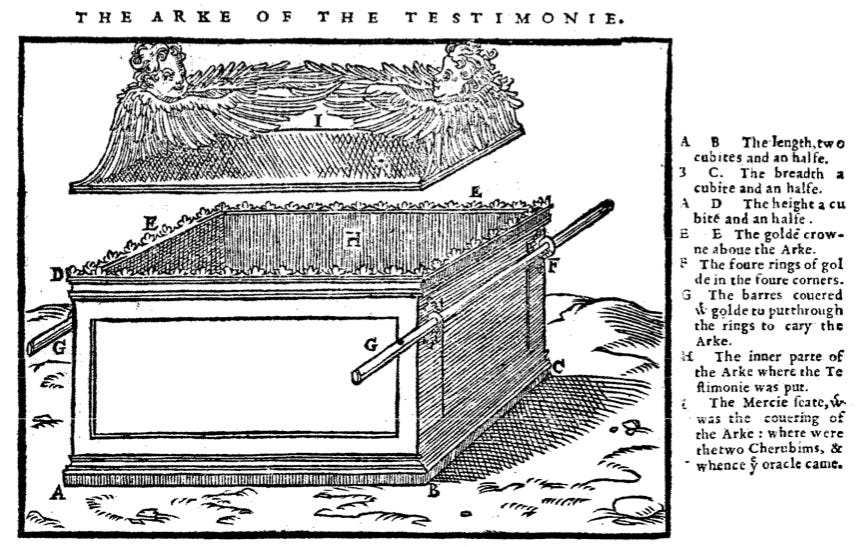
Most holy - Ark of the covenant contained:
Ten commandments → Identifies the sin of man;
Mercy seat → Christ’s mercy and grace to save man from transgression;
Covering angels of gold on ark → God’s presence manifested by bright light called “Shekinah”.
There were two service processes throughout the year:
A) Daily service (Lev 4):
This process is initiated by the person admitting his sin having done something against the commandments:
27 And if any one of the common people sin through ignorance, while he doeth somewhat against any of the commandments of the Lord concerning things which ought not to be done, and be guilty;
28 Or if his sin, which he hath sinned, come to his knowledge: then he shall bring his offering, a kid of the goats, a female without blemish, for his sin which he hath sinned.
Actions:
Bringing the offering: The sinner brings an unblemished animal (bull, goat, lamb, or birds, depending on the person's status and means).
Laying hands on the animal: The sinner places their hands on the animal's head.
Slaughtering the animal: The animal is killed before the Lord.
Blood manipulation: The priest takes the blood and sprinkles it before the veil, puts some on the horns of the altar, and pours the rest at the base of the altar.
Burning of fat: The fat portions are burned on the altar.
Disposal of remains: The rest of the animal is taken outside the camp and burned.
Symbolism:
Unblemished animal: Represents perfection and the cost of sin.
Laying on of hands: Symbolizes the transfer of sin from the person to the animal.
Slaughter: Represents the death penalty for sin.
Blood manipulation: Signifies cleansing and atonement. "For the life of the flesh is in the blood: and I have given it to you upon the altar to make an atonement for your souls" (Leviticus 17:11).
Burning of fat: Represents giving the best to God.
Disposal outside the camp: Symbolizes the removal of sin from the community.
Summary: Person realizes and admits their sin (against commandments), transfers it to unblemished and innocent which is then sacrificed.
Yearly service:
Actions:
Preparation: The high priest bathes and puts on special linen garments.
Bull offering: The high priest offers a bull as a sin offering for himself and his household.
Two goats: Two goats are presented before the Lord at the door of the tabernacle.
Casting lots: Lots are cast to determine which goat is "for the Lord" and which is the "scapegoat."
Goat for the Lord: This goat is sacrificed as a sin offering for the people.
Entering the Holy of Holies: The high priest enters with incense and the blood of the bull and goat.
Sprinkling blood: Blood is sprinkled on and before the mercy seat.
Scapegoat: The high priest lays his hands on the scapegoat, confessing the sins of the people, and it is sent into the wilderness.
Changing garments: The high priest changes back into his regular garments.
Burnt offerings: Additional burnt offerings are made for the priest and the people.
Symbolism:
Special garments: Represent purity and the unique role of the high priest.
Bull offering: Symbolizes the need for the priest to be cleansed before interceding for others.
Two goats: Represent two aspects of atonement - payment for sin and removal of sin.
Casting lots: Shows God's choice in the atonement process.
Entering the Holy of Holies: Symbolizes approaching God's presence, only possible through sacrifice.
Sprinkling blood: Represents cleansing and atonement for sins.
Scapegoat: Symbolizes the removal of sin from the community.
Changing garments: Represents moving from a state of special consecration back to regular service.
Burnt offerings: Symbolize complete dedication to God.
Summary: Jesus is both the sacrifice and the high priest when approaching God and representing man’s sin.
Once a year, the sanctuary is cleansed of the accumulated record of sins. Israel met in prayer and the “Lord’s goat” was slain and blood sprinkled in the most holy. The priest came out and confessed their sins over a “scapegoat” (represent Satan - the origin of sin) which is sent into the wilderness to die. This process does not suggest that Satan is man’s sin-bearer.
The earthly sanctuary ritual ended when Jesus died on the cross because He is the sacrifice to which all of that pointed. When he ascended he entered the first phase of His ministry in the heavenly sanctuary (Heb 9:11-12).
The notion that literal Israel wants to rebuild and re-instate this model is not Biblical.
The only conclusion then is that in 1844AD the process of cleansing the heavenly sanctuary began (Heb 9:22-28, Mal 3:2-4). This implies that Jesus commenced the process of investigating the record (Heb 9:27, Rev 14:6-7) of his followers (1 Pet 4:17) in the books of heaven (Dan 7:9-10, 2 Cor 5:10) where all is recorded (Job 16:19, Isa 65:6-7, Eccl 12:14, Matt 12:36). The ten commandments is the standard by which sin is judged (James 2:10-12) and forgiveness obtained via Jesus’ blood. His children is judged by His blood but their sins will be washed and not remembered ever (Isa 43:25, Heb 10:14,17, Jer 31:34, 50:20). Those who have not had their sins confessed “beforehand, going before to judgement” (1 Tim 5:24) to the heavenly sanctuary to be forgiven by Jesus’ mediation are “cut off” (Rom 11:22, Ps 37:9,10) and eternally lost. Finally, the sins is then transferred to Satan (Lev 16:22 - “And the goat shall bear upon him all their iniquities unto a land not inhabited: and he shall let go the goat in the wilderness.").
What did this mean for earthly Israel?
All who had confessed their sins and sent them on to the sanctuary beforehand (today - we repent in prayer) were judged worthy, but those who neglected this work of preparation were judged unworthy and were “cut off” from among God’s people.
Do we have evidence of a heavenly sanctuary?
From Ex 25:8 we know that God wanted a sanctuary that he could dwell with earthly Israel. We know that the high priest had to cleans it of sin once a year. We also know that the Ark of the Covenant was the throne on which the glory of God manifested. This was His presence among us at that time. Here is the Geneva Bible version:

Paul noted a few times that Jesus entered the first half of the sanctuary when he died: Heb 4:14; 8:2; 8:6, 9:24, Acts 7:44.
In Revelation, John was in the spirit in heaven and he saw the throne, which is in the most holy, as he states in Rev 4:1,5,9, Rev 8:3 and Rev 11:19.
So at some point Jesus had to move from the holy to the most holy and according to Daniel that occurred at the end of the 2300 days, at which time Jesus entered as high priest in the presence of God to mediate on our behalf when Judgement began.
Jesus went to heaven to commence that process.
Thus, Jesus ascended to heaven and entered the Holy and in 1844AD He entered the Most Holy.
Typology
The literal sanctuary

The sanctuary is a typology of the Christian life:

And then the phases of Jesus’ work for us:

The Sanctuary services and furnishings represent different aspects of salvation and Christ's work:
Altar of burnt offering represents Christ's sacrifice (Rev 5:6)
Laver represents baptism and cleansing (Eph 5:25-26)
Table of showbread represents Christ as the bread of life (John 6:51)
Lampstand represents the Holy Spirit (Zech 4:2-6)
Altar of incense represents prayers of the saints (Rev 5:8, 8:3-4)
Ark of the Covenant represents God's throne and law (Exodus 25:10-22)
Does this make sense?
If one considers preterism, then the judgement process must have been completed at some point in the past. Why would Jesus then wait for a return? It cannot be to wait for everyone to hear the message because they’ve been judged. This would imply that everyone did receive the message and have been judged and now we wait. This interpretation does not make sense.
If it’s in the future, then there has to be two judgements: 1) One for those He secretly rapture, and 2) another for those that remain on earth that apparently gets another chance. There is absolutely no evidence of this in the Bible.
Hebrews 9:23-28 reveals Christ’s work in the most holy place of heaven’s sanctuary as:
To appear in the presence of God for us as our Mediator;
To forgive our confessed since;
To perform a work of judgement;
To purify or cleanse the sanctuary of the record of our sins;
To put away or make final disposition of sin; and
After this, He will come again without sin.
Thus, what does make sense is for the Judgement to complete just prior to the second advent and no further change (Rev 22:10-11).
The media led us to believe that we die and immediately go to heaven. This implies that either a) everyone will enter OR b) that we arrive at the “gates” and some are shown away. Neither makes any sense. Where do they go? Where does the Bible refer to this? The Bible is clear that the judgment is complete by the time Jesus returns to take His children with Him and the remaining will look onto the unfolding spectacle (1 Thess 4:15-17).
Roman Catholicism teaches a purgatory which definitely has no Biblical support.
Who is alive and who is dead?
The Bible supports the following:
For man, there is only one death and then the judgement (Heb 9:27);
Some will be alive when Jesus returns and will never experience death:
Jesus gave examples of people that are taken by the angels which is not a secret rapture at all (Matt 24:40-41, Luke 17:34-36).
Both Enoch and Elijah went directly to heaven - a typology of those that never die but go to heaven (Gen 5:24, Heb 11:5, 2 Kings 2:11, 1 Thess 4:16-17).
Moses died but was taken to heaven - typology of those that died and then go to heaven (Jude 1:9, Mat 17:3).
His children in death will rise at His second advent - Jesus is that typology (1 Thess 4:16-17, 1 Cor 15:51-52, Phil 3:20-21, John 5:28-29);
Those that are not to be taken, remain dead (Rev 20:5); and
After a thousand years, the second resurrection occurs and those are cast into the lake of fire (Rev 20:4-6, 12-13).
When are the sins finally wiped away?
Considering the tabernacle model on earth, the sins was finally done away with once a year when the High Priest completed the yearly process. That was for only those that presented their sins throughout the year.
This was a single event. We know the Jewish feasts are also a typology of the entire Christian era played out in one year. THUS there is only one judgement.
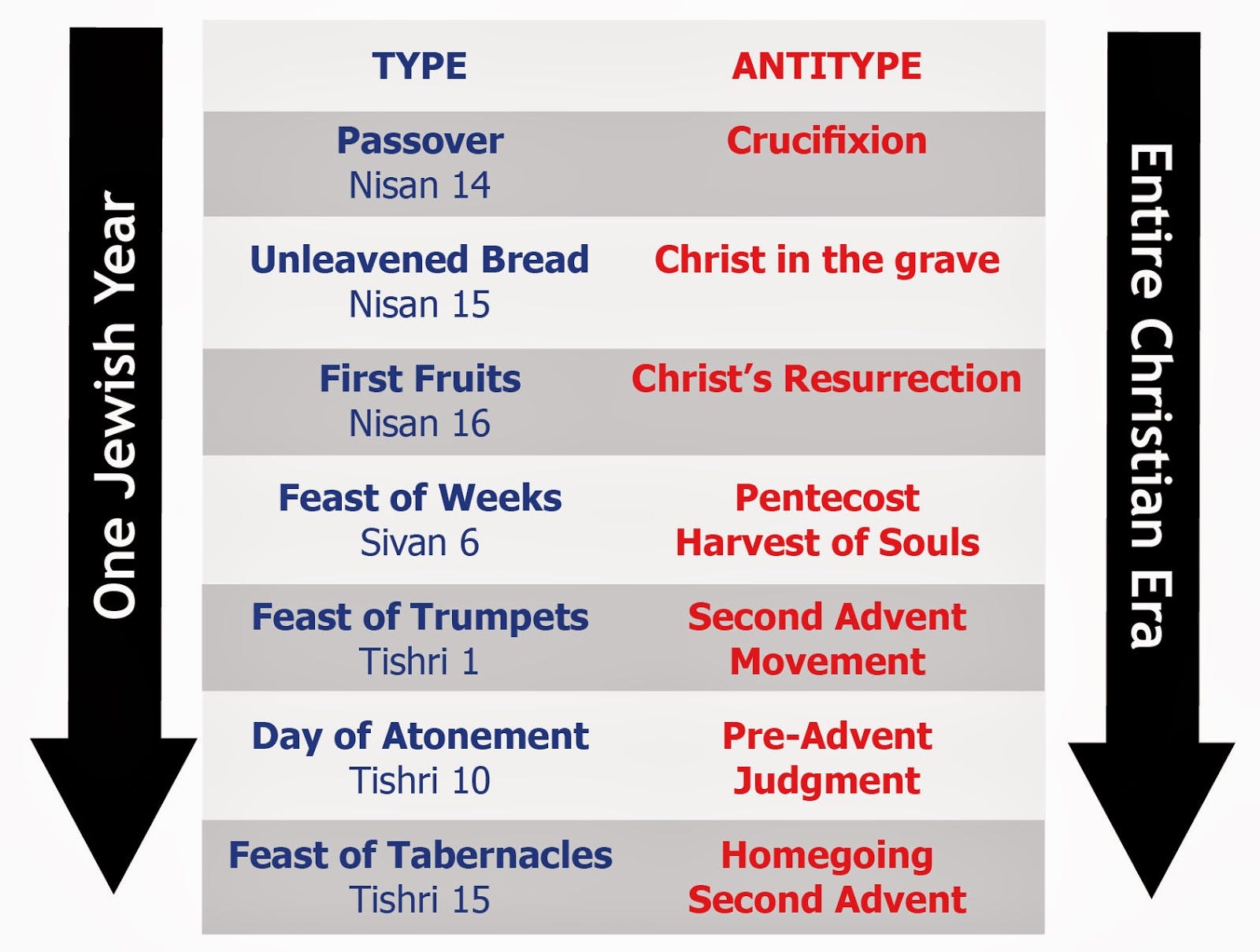
If that is an accurate model of the Heavenly sanctuary then the sins remain on record until the sanctuary is finally cleansed, a process that commenced at the end of 2300 days in 1844AD.
Rev 22:11-12 notes that there is a point when the investigative judgement completes. It is not clear how that event relates to the plagues or the enforcement of the mark.
Key takeaway
Remember this: The judgement is complete prior to the second advent.
whydoneit?
Why did God plan it this way?
He promised to tell us in advance and thus the earthly sanctuary is a model of the heavenly one.